
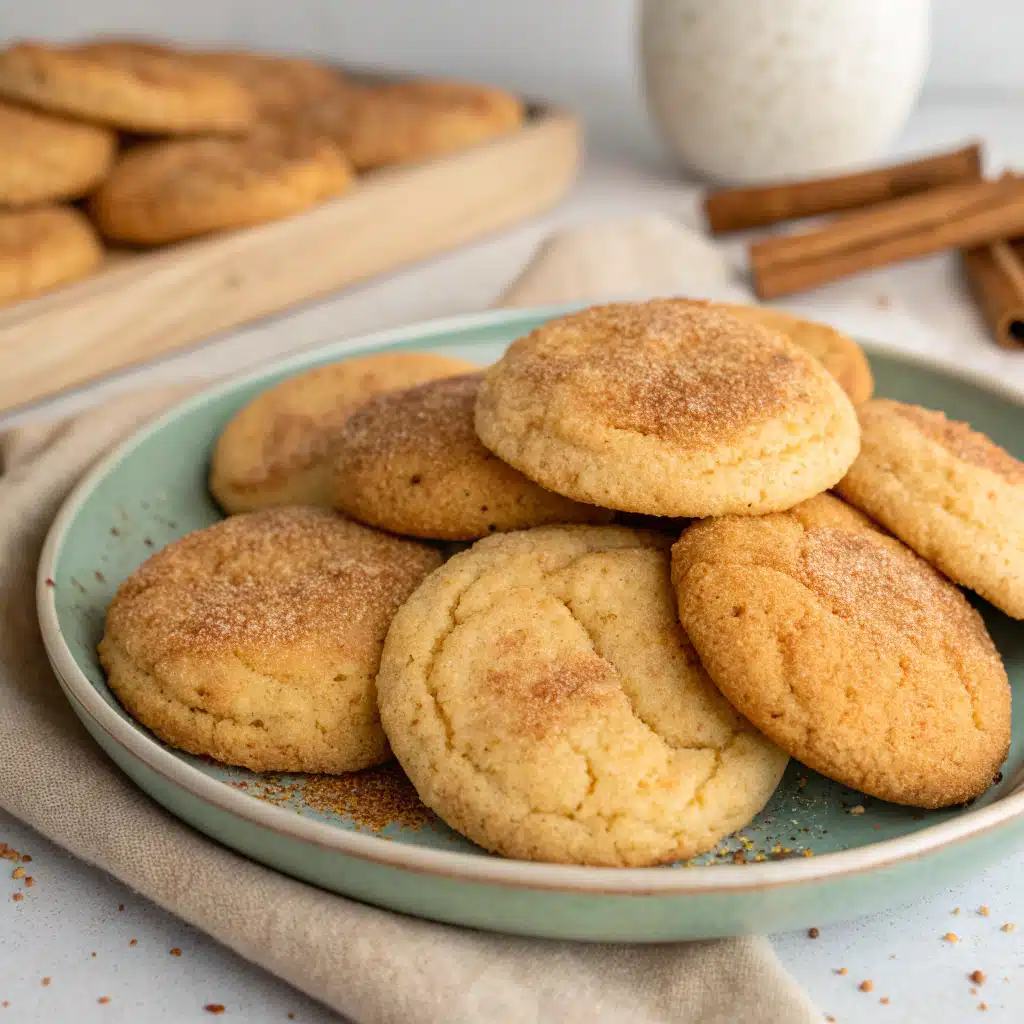
The Classic Snickerdoodle: A Recipe for Chewy Perfection
Introduction
The Snickerdoodle is more than just a sugar cookie; it is a beloved American classic defined by its signature tangy flavor and beautiful, crackled surface. While the name itself is delightfully whimsical—often speculated to have derived from German or Dutch terms for a small, rolled pastry—the true magic lies in the use of cream of tartar. This acidic ingredient reacts with baking soda to provide a distinct lift and chewiness that traditional sugar cookies simply cannot replicate. If you are looking for a cookie that is crispy on the edges, soft in the center, and bursting with buttery warmth and cinnamon spice, the Snickerdoodle is the perfect choice.
Ingredients
- 2 3/4 cups (345g) All-Purpose Flour
- 2 teaspoons (10g) Cream of Tartar
- 1 teaspoon (5g) Baking Soda
- 1/2 teaspoon (3g) Salt
- 1 cup (225g) Unsalted Butter, softened
- 1 1/2 cups (300g) Granulated Sugar (for dough)
- 2 large Eggs
- 1 teaspoon (5ml) Vanilla Extract
- For the Coating:
- 1/4 cup (50g) Granulated Sugar
- 2 teaspoons (10g) Ground Cinnamon
Step-by-step Preparation
- Preheat and Prepare: Preheat your oven to 375°F (190°C). Line two large baking sheets with parchment paper. In a small, shallow bowl, combine the 1/4 cup sugar and 2 teaspoons of cinnamon for the coating. Set aside.
- Combine Dry Ingredients: In a medium bowl, whisk together the flour, cream of tartar, baking soda, and salt. Set aside. Tip: Whisking ensures the cream of tartar is evenly distributed, which is crucial for the cookie’s texture.
- Cream Butter and Sugar: In a large mixing bowl (or stand mixer fitted with the paddle attachment), beat the softened butter and 1 1/2 cups sugar on medium speed until light and fluffy—about 3 to 4 minutes. Scrape down the sides of the bowl.
- Add Wet Ingredients: Beat in the eggs one at a time, ensuring each is fully incorporated before adding the next. Stir in the vanilla extract.
- Mix Dough: Gradually add the dry ingredient mixture to the wet ingredients, mixing on low speed until just combined. Be careful not to overmix, as this can develop the gluten and result in tough cookies.
- Roll and Coat: Scoop the dough using a 1.5-tablespoon cookie scoop or roll into 1-inch balls. Roll each ball generously in the cinnamon-sugar coating. Place the coated dough balls 2 inches apart on the prepared baking sheets.
- Bake: Bake for 8 to 10 minutes. The edges should be set, but the centers should still look slightly soft and puffy. Tip: Do not overbake! Snickerdoodles are meant to be chewy; they will set up completely as they cool.
- Cool: Let the cookies cool on the baking sheet for 5 minutes before transferring them to a wire rack to cool completely.
Nutritional Information
Based on a recipe yielding approximately 3 dozen cookies, one serving (1 cookie) contains roughly 110-120 calories. Snickerdoodles are primarily a source of carbohydrates and sugar. While they should be enjoyed in moderation, they provide quick energy and the comfort of whole, simple ingredients (butter, flour, eggs). They are generally low in saturated fat when compared to many other baked goods.
Storage
Store cooled Snickerdoodles in an airtight container at room temperature for up to 5 days. For longer storage, the unbaked dough balls can be frozen: place them on a baking sheet until solid, then transfer them to a freezer bag. Bake frozen dough balls straight from the freezer, adding 2 to 3 minutes to the baking time. Baked cookies also freeze well for up to 2 months.
Conclusion
The perfect Snickerdoodle is a testament to simple ingredients working in harmony. Serve these warm alongside a tall glass of cold milk or a hot cup of coffee for the ultimate comfort treat. For a fun variation, try adding a pinch of pumpkin pie spice to the cinnamon coating during the autumn months, or substitute brown sugar for half of the granulated sugar in the dough for a deeper, molasses flavor.